
A House of Bitcoin report on wealth, security, and the sovereign exit
Why the Fracturing of Western Safety Points to Bitcoin
For most of the postwar era, the deal between Western citizens and their states was simple. Pay your taxes, obey the law, and in exchange the state guarantees two things: your physical safety and the stability of your money.
That contract is visibly under strain. In the last two years alone, the United States has seen two assassination attempts on a former and current president, Donald Trump, and the assassination of activist and Turning Point USA founder Charlie Kirk at Utah Valley University in September 2025. In the UK, former Conservative minister and Reform UK spokeswoman Ann Widdecombe was found dead in her Devon home in July 2026 in an attack now being investigated by counterterrorism police, with a motive yet to be officially confirmed.
Commentators disagree - sharply and sincerely - about why political violence is rising in both countries. Some point to immigration policy and rapid demographic and cultural change; others point to online radicalization, inequality, partisan media, or simple failures of policing and mental-health systems. This report doesn't try to settle that argument. What's harder to dispute is the response: regardless of cause, both the physically wealthy and the financially sophisticated are behaving as though the state's old guarantees - safety and sound money - can no longer be fully relied on. That behavior is the real story, and it's one this report can document.
Part I: The Privatization of Safety
Wealth has always bought comfort. What's new is that it increasingly buys exit from the public system entirely, rather than a nicer version of it.
Armor over exposure: The visible status vehicle in London and New York is no longer the sports car - it's the tinted, sometimes armored Mercedes Sprinter or V-Class van that moves principals between private buildings without a street-level moment in between. In Los Angeles and New York, helicopter services like Blade let executives skip both traffic and the sidewalk altogether.
Private policing: Indian Creek Village in Miami - the so-called "Billionaire Bunker" - runs its own 24/7 private police force patrolling by land and water. Gated master-planned communities like the Yellowstone Club in Montana or Lyford Cay in the Bahamas function as small private jurisdictions, with security, roads, and amenities entirely outside municipal control.
Members-only urbanism: Clubs like Annabel's and Oswald's in London, or Zero Bond and Casa Cipriani in New York, aren't just restaurants - they're vetted, private substitutes for the public square, letting the wealthy socialize, work, and dine without contact with the city outside.
Migration to elevation and distance: Climate and crime risk are increasingly priced into where the wealthy choose to live - inland and elevated over coastal and central, geographically diversified over concentrated. A $20 million coastal property is a rounding error to a billionaire's balance sheet; losing it changes nothing about their fundamental security.
None of this is new in kind - the rich have always bought safety. What's notable is the speed and completeness of the shift toward parallel, privatized systems that don't touch the public ones at all.
By the numbers:
- The global private security services market is estimated at roughly $260–290 billion in 2026 (estimates vary by research house, e.g. Technavio, Grand View Research, Global Growth Insights), up from a market that didn't crack $200 billion a decade ago.
- Within that, the executive/close-protection niche specifically - VIP protection for corporate leaders, dignitaries, and public figures - is one of its fastest-growing segments, with multiple industry forecasts putting its CAGR at 6–10%+ through the early 2030s, faster than the security industry overall.
- North America alone accounts for roughly a third of global private security spend, and industry surveys report over half of high-end residential communities in the region now use professional patrol or surveillance staff rather than relying solely on municipal policing.
Part II: The Fiat Trap
The same instinct - insulate rather than reform - shows up in how elites treat money and citizenship.
Millionaire migration and Citizenship by Investment (CBI): Golden-passport and residency-by-investment programs in places like Portugal, Italy, Malta, and the Caribbean have long let the wealthy diversify not just assets but *jurisdictions*. The logic: if one country becomes unstable or hostile, you need somewhere else to stand.
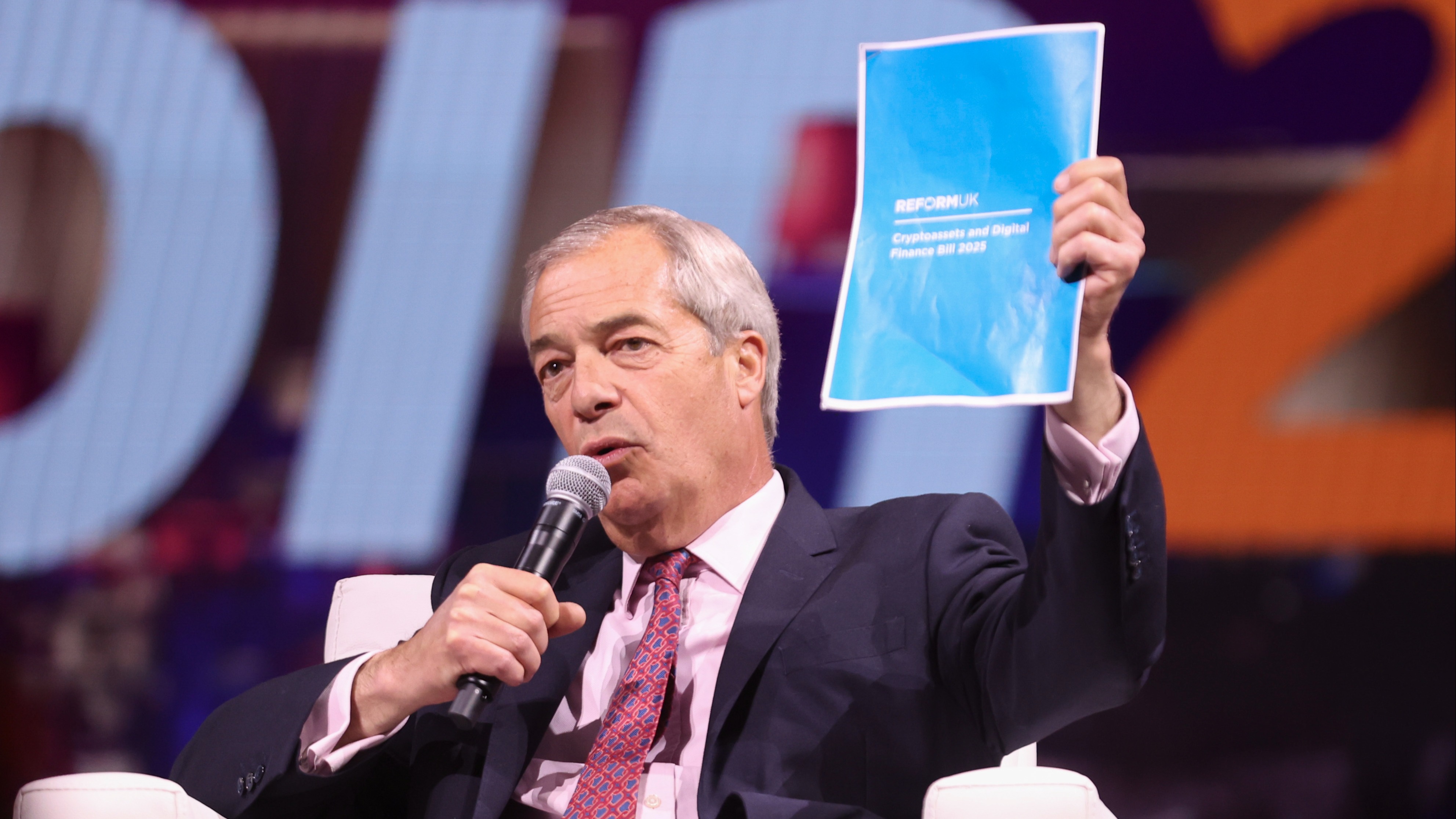
De-banking as a live political flashpoint: In 2023, Coutts - NatWest's private bank - closed Nigel Farage's account; internal documents later showed his political profile was a factor in the decision, and NatWest's CEO resigned over the fallout. The UK's financial regulator, the FCA, subsequently said it found no systemic evidence that politicians' accounts were being closed primarily over their views - a genuinely contested point - but the episode still pushed the UK government to legislate longer notice periods and mandatory explanations for account closures. Whatever the full truth of the Farage case, it demonstrated something uncomfortable to a lot of people: a bank account is a permission, not a right, and that permission can be revoked.
Startup cities and tax-optimized jurisdictions: Rather than lobbying existing states to change, a newer cohort is simply building alternatives. Próspera, a private semi-autonomous zone in Roatán, Honduras, allows companies to keep books and pay taxes in Bitcoin. Dubai and Zug ("Crypto Valley") in Switzerland have built regulatory and tax regimes specifically to attract crypto wealth - 0% capital gains, clear rules, and infrastructure that treats digital assets as first-class citizens rather than a compliance headache.
The common thread across CBI, de-banking backlash, and startup cities is the same one running through Part I: a bet that legacy institutions - cities, banks, and eventually states themselves - are becoming less reliable, and that the rational response is redundancy and exit, not reform.
By the numbers:
- The global investment-migration ("golden visa"/CBI) industry has grown roughly fivefold since 2019, from around $21 billion to an estimated $100 billion by the mid-2020s according to industry researchers, with host governments collecting an estimated $20 billion a year directly from citizenship-by-investment programs.
- In the UK specifically, **453,230 personal bank accounts were closed in 2025** - more than ten times the 45,091 closed in 2016–17 - while a separate Treasury Committee inquiry found major banks shut roughly **140,000 small-business accounts in 2023 alone** (about 2.7% of all UK SME accounts). Banks overwhelmingly cite "financial crime" risk rather than politics; the FCA has said it found no systemic evidence of politically-motivated closures. But the trendline a -tenfold rise in a decade - is what's driving demand for alternatives, regardless of any individual case's cause.
- Henley & Partners' widely cited (and separately disputed - tax researchers have challenged its methodology) migration data put global millionaire relocations at a record **142,000 in 2025**, with **165,000 forecast for 2026**. Even skeptics of the precise headcount agree on the direction: enquiries to migration-advisory firms from US nationals reportedly **doubled in 2025**.
- Próspera, the private Bitcoin-native jurisdiction in Honduras, remains small in absolute terms - hundreds rather than thousands of residents - but it's a live legal experiment, not a thought exercise: companies there can legally keep books and pay taxes in satoshis, something no G7 country currently permits.

Part III: The Sovereign Exit
Here's the argument House of Bitcoin exists to make: the physical-safety story and the financial-safety story aren't two separate trends. They're the same trend, expressed twice.
If you don't fully trust a city's police to protect you, you buy your own security. If you don't fully trust a bank to hold your account without political conditions attached, you hold an asset that no bank, and no government, can freeze, seize, or de-platform by decision. That's not a metaphor - it's the literal design of Bitcoin. A wallet secured by a self-held private key has no counterparty to pressure, no reputational-risk committee, no compliance department that can decide your politics are a liability.
"Be your own bank" is the plain-language version of self-custody: It means the difference between an asset a third party lets you access, and an asset only you can access. For a family that has already concluded it needs private security and a second passport, refusing to also hold an asset it fully controls is the inconsistent position, not the cautious one.
Bitcoin as a trillion-dollar asset class, not a trade: As of late August 2026, Bitcoin's market capitalization sits at roughly **$1.3 trillion** - comparable to the market cap of a top-10 S&P 500 company, and larger than the GDP of all but about 15 countries on Earth. It has done this while trading in a punishing range this year, from over $93,000 in January down to the low $60,000s by August - a reminder that "trillion-dollar asset" and "volatile asset" are not mutually exclusive descriptions, and shouldn't be treated as one. Bitcoin's roughly 20.1 million circulating coins (against a hard cap of 21 million) is the scarcity mechanism behind the "digital gold" comparison; unlike gold, that supply schedule is verifiable by anyone, instantly, without an assay.
Productive exit, not just defense: Gated communities and private police are *defensive* wealth - money spent to survive inside a system you no longer trust. Próspera and Bitcoin-denominated jurisdictions are closer to *offensive* wealth - capital actively building an alternative rather than merely walling off a piece of the old one. That's the more interesting long-term story, and the one worth watching.
Conclusion: The Sovereign Horizon
Whatever your view on the causes of political violence, immigration policy, or the health of Western institutions - and reasonable people land in very different places on all three - the behavior of capital is a fact you can observe directly. It is quietly, consistently moving toward redundancy, privatization, and self-custody, in both physical security and money.
The old contract offered protection in exchange for trust. The emerging one offers no protection at all - only the tools to protect yourself. Bitcoin is the financial half of that toolkit. Whether you find that empowering or bleak probably depends on how much trust you still have left to give the institutions in question.
House of Bitcoin covers the intersection of wealth, security, and digital sovereignty.